
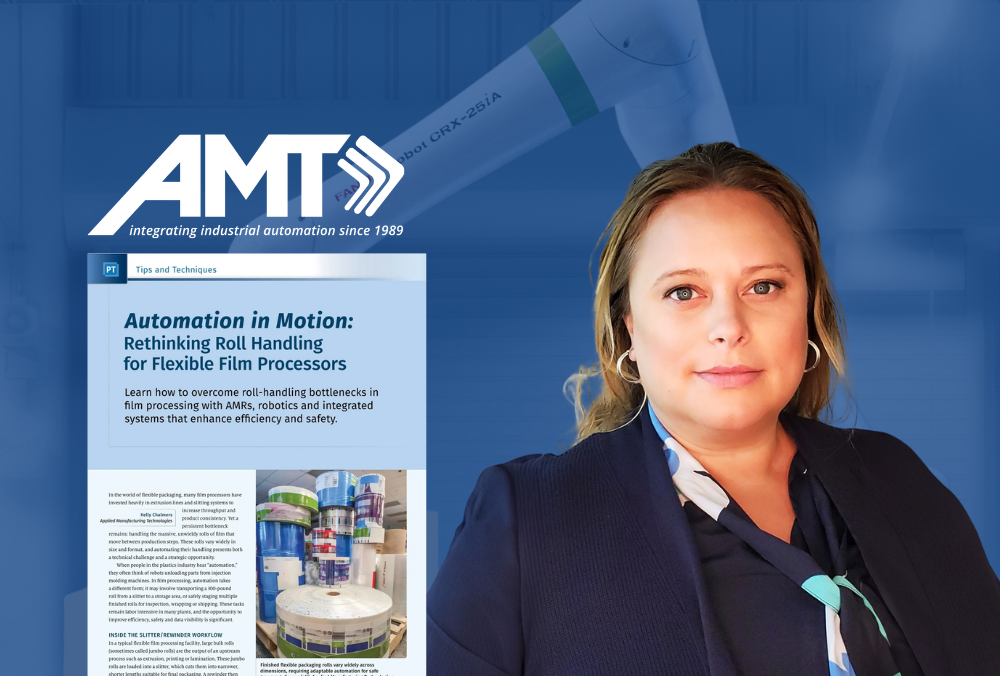
When most manufacturers hear the word automation, they think of robots tending injection molding machines—removing parts, improving cycle times, and reducing labor. In film and sheet extrusion, the opportunities for automation are just as significant, though often less visible.
In a recent cover article published in Plastics Technology, AMT’s Kelly Chalmers explores one of the most overlooked areas for improvement: roll handling.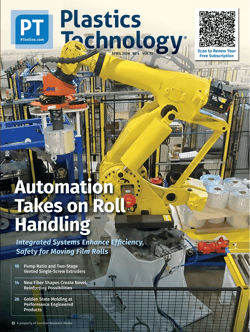
From transporting jumbo rolls to managing output from slitter/rewinder systems, roll handling remains a largely manual process in many facilities. These tasks involve heavy, variable products that are difficult to move, stage, and prepare for downstream operations. As a result, they can limit throughput, introduce variability, and create ergonomic challenges for operators.
This article takes a closer look at how automation can be applied to these processes in practical ways. Rather than focusing on a single technology, it outlines the broader considerations involved in automating roll-based workflows, including:
- Managing wide variability in roll size, weight, and configuration
- Maintaining safe and effective human interaction when needed
- Integrating downstream processes such as labeling, inspection, and palletizing
- Exploring technologies like autonomous mobile robots (AMRs) for material transport
As slitter and rewinder technologies continue to improve, the need for equally capable downstream handling becomes more critical. Addressing roll handling as part of the overall process can help processors improve consistency, support higher throughput, and reduce strain on their workforce.
